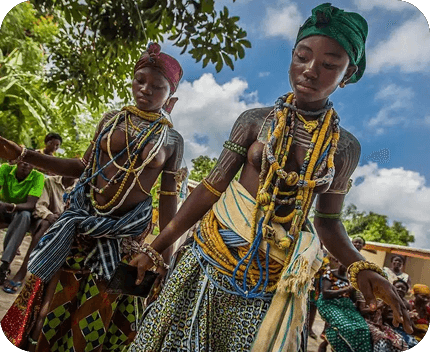
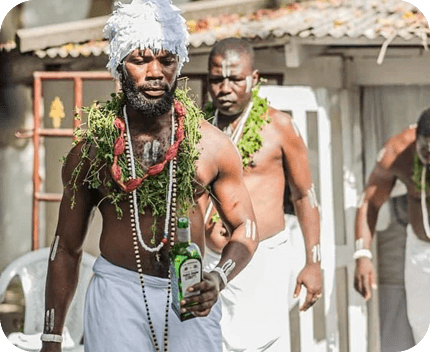
Traditional religious practices in Ghana encompass a diverse range of beliefs and rituals. These traditional religious practices are deeply rooted in Ghanaian culture and continue to play a significant role in the lives of many people, alongside Christianity and Islam.
Ancestor Worship
Many traditional Ghanaian religions involve veneration of ancestors, including offering prayers, libations, and sacrifices to seek their guidance and blessings.
Pouring libations:
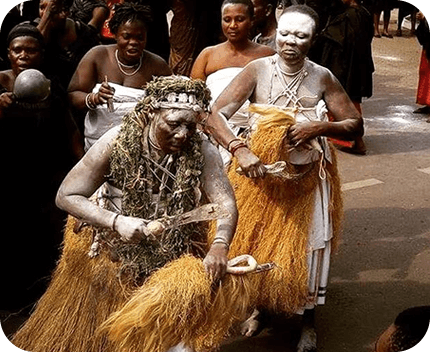
In many Ghanaian cultures, pouring libations is a common ritual where prayers and offerings are made to honor ancestors and seek their blessings. This involves pouring a liquid, typically water or palm wine, onto the ground while reciting prayers or invoking the names of ancestors.
Ancestral Festivals:
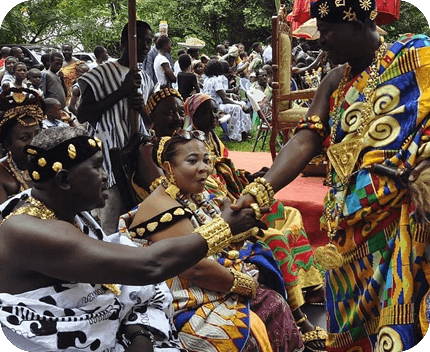
Various festivals across Ghana, such as the Homowo festival celebrated by the Ga people, involve rituals and ceremonies dedicated to honoring ancestors. These festivals often include processions, drumming, dancing, and the sharing of traditional foods.
Gods and Deities
Various ethnic groups in Ghana worship different gods and deities believed to have influence over different aspects of life, such as fertility, agriculture, and warfare.
Pouring libations:
In many Ghanaian cultures, pouring libations is a common ritual where prayers and offerings are made to honor ancestors and seek their blessings. This involves pouring a liquid, typically water or palm wine, onto the ground while reciting prayers or invoking the names of ancestors.
Ancestral Festivals:
Various festivals across Ghana, such as the Homowo festival celebrated by the Ga people, involve rituals and ceremonies dedicated to honoring ancestors. These festivals often include processions, drumming, dancing, and the sharing of traditional foods.
Shrines and Sacred Sites
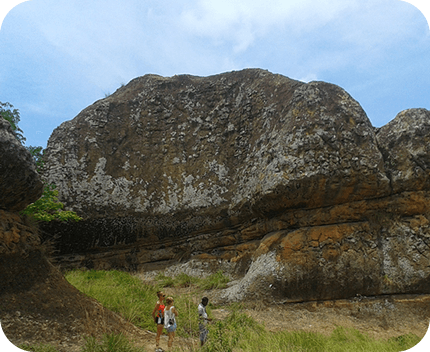
Sacred groves, rivers, and natural landmarks are often revered as places where the spiritual world intersects with the physical world. These places are often associated with rituals and ceremonies.
The Tano Sacred Grove:
Located in the Brong-Ahafo Region, the Tano Sacred Grove is a revered forest area where rituals and ceremonies are conducted to honor ancestral spirits and deities associated with the natural environment.
Tongo Hills:
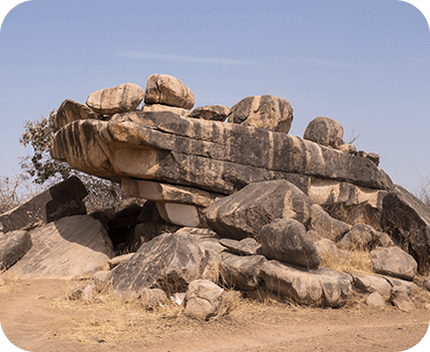
The Tongo Hills in the Upper East Region are considered sacred by the
Talensi people. They contain shrines and rock formations used for rituals, divination and offerings to ancestral spirits.
Divination and Spiritual Consultation
Traditional priests and priestesses use divination methods such as casting lots, reading cowrie shells, or interpreting dreams to provide guidance and insight into personal or communal matters.
Akan Akom priests:
Among the Akan people, Akom priests use various divination methods such as the Afa or Akan cowrie shell divination to provide spiritual guidance and insight into personal and communal matters.
Dagbamba soothsayers:
In Dagomba society, soothsayers known as Zugus use the divination method of throwing objects onto a specially prepared surface to interpret messages from the spirit world and provide advice to individuals and communities.
Rituals and Ceremonies
Traditional religious ceremonies are an integral part of Ghanaian culture and may include festivals, initiation rites, healing ceremonies, and rites of passage.
Odwira Festival:
The Odwira festival celebrated by the Akwapim and Akyem people involves purification rituals, processions, drumming, and dancing to honor the gods and ancestors and to mark the end of the harvest season.
Damba Festival:
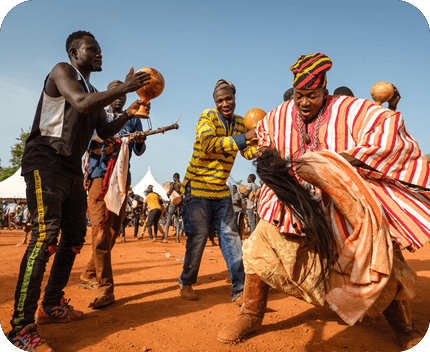
Among the Dagombas and other Northern ethnic groups, the Damba festival is a colorful celebration featuring drumming, dancing, and horse riding to commemorate the birth and life of the Islamic prophet Muhammad.
Sacrifices and Offerings
Offerings of food, drinks, livestock, and other items are commonly made to appease ancestral spirits and deities or to seek their favor and protection.
The Tano Sacred Grove
Located in the Brong-Ahafo Region, the Tano Sacred Grove is a revered forest area where rituals and ceremonies are conducted to honor ancestral spirits and deities associated with the natural environment.
The Tongo Hills
The Tongo Hills in the Upper East Region are considered sacred by the Talensi people. They contain shrines and rock formations used for rituals, divination, and offerings to ancestral spirits
Drumming and Dancing
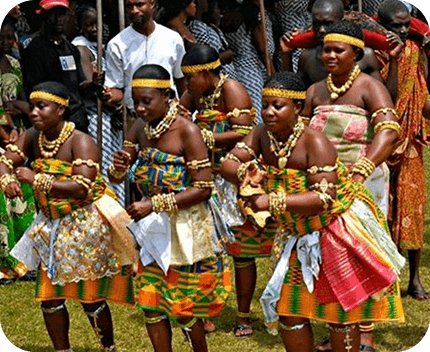
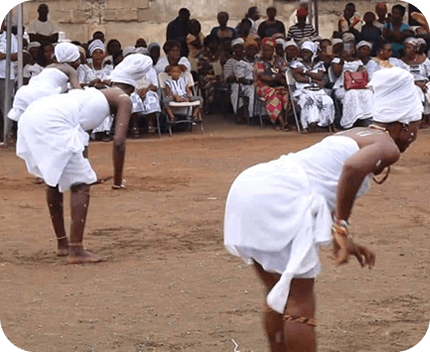
Music and dance play a significant role in traditional religious practices, serving as a means of communication with the spiritual world and invoking the presence of gods and ancestors.
Adowa Dance
The Adowa dance is a popular traditional dance performed by the Akan people during festivals, funerals, and other cultural events. It is accompanied by rhythmic drumming and intricate movements that convey messages and emotions.
Kpanlogo Dance
Originating from the Ga people of the Greater Accra Region, the Kpanlogo dance is characterized by its energetic movements, handclapping, and drumming rhythms. It is often performed during socialgatherings and
celebrations.
Taboos and Prohibitions
Traditional religions often have strict rules and taboos governing behavior, diet, and social interactions, which are believed to maintain harmony with the spiritual world and ensure the well-being of the community.
Forbidden foods
Certain foods may be considered taboo in traditional Ghanaian culture due to religious beliefs or cultural customs. For example, among some ethnic groups, it may be forbidden to consume certain types of meat or fish on specific days or during certain periods.
Sacred spaces
Traditional beliefs may dictate taboos regarding behavior within sacred spaces such as sacred groves, shrines, or ancestral burial grounds. These taboos often regulate activities such as loud noises, inappropriate behavior, or trespassing.
Initiation and Membership
Traditional religious organizations often have initiation rituals through which individuals become members and gain access to spiritual knowledge, powers, and responsibilities.
Puberty rites
Many ethnic groups in Ghana have initiation rituals to mark the transition from childhood to adulthood. These rites often involve ceremonies, teachings, and tests of endurance to prepare young individuals for their roles and responsibilities within the community.
Priesthood initiation
Individuals who are called to serve as priests or priestesses in traditional religious practices may undergo specific initiation rituals and training to acquire the necessary knowledge, skills, and spiritual powers to fulfill their roles effectively.
Syncretism:
In many parts of Ghana, traditional religious beliefs and practices have merged with Christianity or Islam, resulting in syncretic forms of worship that blend elements of both traditions.
Christian syncretism:
In some regions of Ghana, traditional religious beliefs and practices have merged with Christianity, resulting in syncretic forms of worship that incorporate elements of both traditions. For example, traditional festivals may be celebrated alongside Christian holidays, and prayers may be offered to both Christian and traditional deities.
Islamic syncretism:
Similarly, among Muslim communities in Ghana, syncretism may occur, with traditional rituals and beliefs being integrated into Islamic practices. This can be seen in the observance of traditional festivals alongside Islamic holidays and the incorporation of local customs into Islamic ceremonies and rituals.